
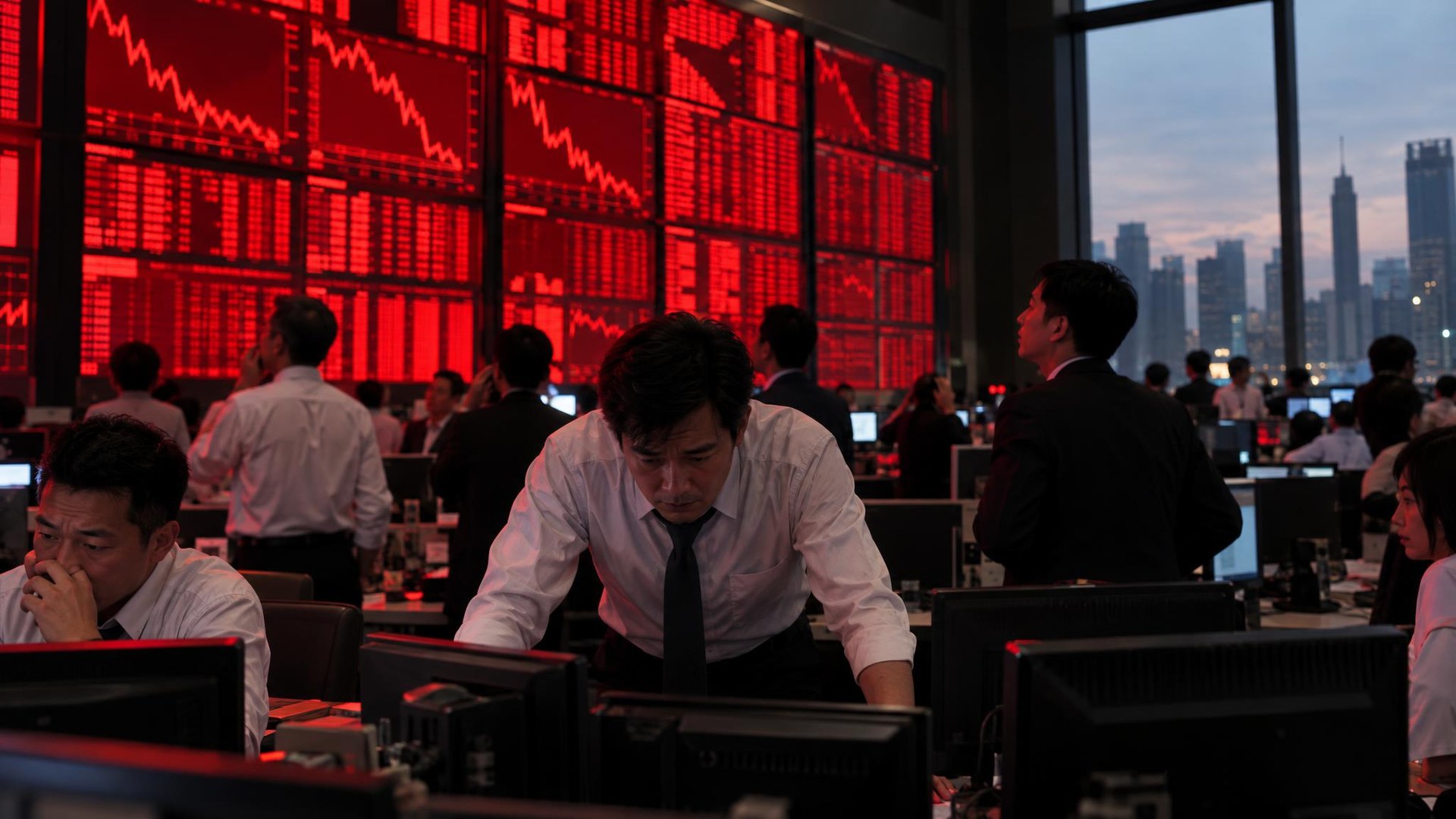
CNBC reported on November 6, 2026, that Asian technology and chip stocks tumbled amid US data-center policy fears and Wall Street’s AI-linked selloff, with contract chipmaker TSMC down 9.6% and South Korea’s SK Hynix losing more than 8%.
Investors were concerned that Democrats’ sweeping US midterm victory could produce tighter restrictions on data-center development. Timothy Moe, Goldman Sachs’ chief Asia Pacific equity strategist, said position unwinding, stop-loss selling and heightened volatility had intensified the Asian declines, and that possible political opposition to US data-center construction could affect demand and profits for Asian AI hardware suppliers. “The market’s tendency is always to shoot first and ask questions later,” he said.
Official Indexes Show the Scale
The Taiwan Stock Exchange’s historical table shows the TAIEX falling to an intraday low of 37,837.05 on November 6 before closing at 39,701.64, against a November 5, 2026, close of 41,574.72. Calculated from those official figures, the low was 3,737.67 points, or 8.99%, below the previous close, while the closing level was down 1,873.08 points, or 4.51%. The table records successively lower closes throughout November 2–6, 2026, showing that the latest decline extended an existing retreat.
Nikkei’s official index page, timestamped 14:45 on November 6, put the Nikkei 225 at 57,562.37, down 3,515.53 points or 5.76%. The same readings, which were not closing values, showed the Nikkei Semiconductor Stock Index down 6.26% at 16,675.47 and the JPX-Nikkei 400 down 6.03% at 33,676.15. The Nikkei Stock Average Volatility Index jumped 32.21% to 44.37, while the dollar-denominated Nikkei Asia300 Investable Index fell 3.64% to 2,162.60.
Losses Across AI Hardware and Related Shares
CNBC’s report showed selling spreading across hardware and related technology shares. Samsung Electronics lost 7% and LG Innotek 10% in South Korea. In Japan, chip-testing equipment maker Advantest fell 12.2%, technology investment giant SoftBank Group dropped 11.6%, and memory chipmaker Kioxia Holdings fell nearly 10%. Taiwan’s Hon Hai Precision Industry, also known as Foxconn, and Foxconn Technology declined 9.4% and 9.1%, respectively, while China’s STAR Market and ChiNext Artificial Intelligence Index each lost more than 4%.
Those moves followed a Wall Street session in which the Nasdaq Composite sank 5.5% and the Philadelphia Semiconductor Index plunged 12.2%. Investors were also questioning the sustainability of the AI investment boom and whether heavy data-center spending would generate adequate returns.
Broader Market and Political Context
The Associated Press reported that South Korea’s Kospi was down 7.4% at 4,985.99 in its morning snapshot, while Hong Kong’s Hang Seng fell 0.7% to 24,630.03 and the Shanghai Composite declined 1.3% to 3,642.10. The milder Hong Kong and Shanghai moves provide a contrast with the much steeper losses in chip shares and Japanese semiconductor indexes.
The preceding US session also brought a 4.4% decline in the S&P 500, a 9.3% fall for Nvidia and a 17.3% tumble for Advanced Micro Devices. The Nasdaq’s close was 11.9% below its all-time high. AI-linked stocks had already been swinging for months on concerns about borrowing costs, valuations and possible slower data-center construction.
The demand mechanism is direct: slower construction would mean fewer purchases of AI chips, electricity and other products and services. Voters across political parties were also wary of AI and concerned about power-bill increases caused by data centers, adding political weight to the construction concerns investors were weighing.
The session repriced Asian AI infrastructure suppliers around expectations for future US construction. Official indexes establish the scale of the market move, while the demand consequence remains an open business question: whether political opposition produces restrictions or construction delays that reduce orders for chips and related infrastructure.
