
Shanghai Electric announced on November 10, 2026 that industrial AI is supporting blade manufacturing, weld inspection and lifecycle maintenance in its heavy-duty gas turbine business, with its SIMPLE platform drawing on data from more than 60 turbine units and over 1 million cumulative operating hours.
The announcement combines equipment-engineering expertise with production and operating data, extending AI from component manufacturing to service at operating plants. The work addresses two central requirements for heavy-duty turbines: precision machining of complex parts and reliable performance throughout long service lives. That scope brings manufacturing quality and maintenance information into the same equipment-lifecycle strategy.
Mixed-Model Blade Production
Turbine blades vary in size, shape and machining route, requiring production equipment to handle multiple component types and processes. Shanghai Electric’s flexible manufacturing line combines AI vision, digital-twin models of production, intelligent scheduling and robotics to support mixed-model manufacturing and automatic changeovers.
Three-dimensional vision and AI identify blade blanks in randomly stacked piles before picking and positioning them. Shanghai Electric reports picking accuracy exceeding 99.99%. This part of the process addresses a basic automation challenge: machinery must first recognize and correctly handle components that do not arrive in a uniform arrangement.
The line also connects production scheduling, manufacturing execution and quality-management systems across loading, machining, inspection and final packing. Operators can switch between fully automated production and standalone machine operation to support continuity. Mixed-model automation therefore sits within a connected workflow that retains production and quality information as blades move through the line.
Inspection During Rotor Welding
Quality assurance extends to large, high-value rotors, where weld quality directly affects safe operation. Inspecting machined features on these large components presents practical difficulties. Shanghai Electric developed an AI-based visual inspection terminal combining AI, robotic control and welding expertise to monitor welding operations in real time and identify defects at an early stage.
The terminal’s embodied-AI design pairs a collaborative robot with a custom end effector, or tooling attachment. Its arm extends and retracts at the touch of a button and automatically adapts to the welding cycle. The company says 5G connectivity allows the system to complete image analysis and return inspection results within seconds.
A feedback loop connects shop-floor observations with process optimization and quality traceability. Inspection data consequently has a role beyond an individual pass-or-fail result: practical manufacturing experience can be retained as digital knowledge and reused in subsequent production work.
Operating Data Informs Maintenance
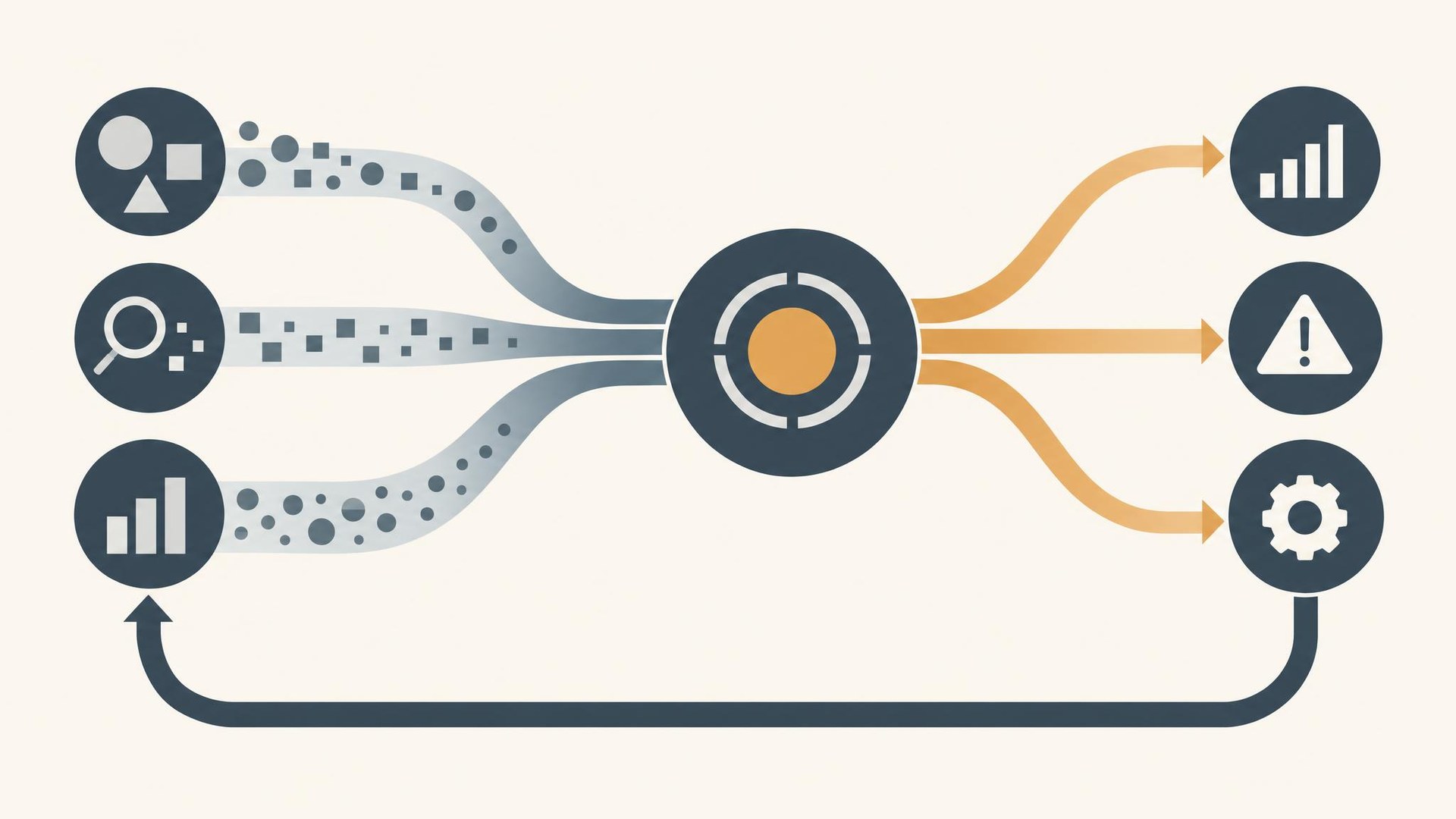
Within SIMPLE, AI is combined with knowledge of gas-turbine operating principles for real-time performance monitoring, dynamic optimization of operating performance and early warnings of potential faults. Cloud-edge coordination links design and operating data in a decision-support workflow covering monitoring, early warning, diagnosis and corrective action. Shanghai Electric describes this as supporting a shift from reactive repairs toward proactive maintenance.
Remote collaboration provides another maintenance channel. Specialists can view live footage from plant sites and use augmented-reality annotations to guide maintenance work, allowing technical assistance to reach locations without limiting expertise to personnel already on site.
Shanghai Electric plans further lifecycle-data integration so manufacturing and operating feedback can refine design, production and after-sales service. It also intends to validate and refine these capabilities in real-world projects as it pursues international gas-turbine business, focusing on reliable operation, timely maintenance support and cost-effective long-term operation.
The next stage therefore depends on validation in operating plants. For Shanghai Electric, the connected approach ties its international expansion to a broader industrial objective: using information gathered during production and years of turbine service to improve both factory processes and long-term maintenance.
